Inside Satelliet: My Amsterdam Visit & Why Circular Furniture Matters for Hospitality
I recently travelled to Amsterdam with Adam and Beth from Design Conformity to visit Satelliet Furniture, one of our certification partners. We were invited to explore their showroom, see new product launches, and discuss how they’re using Design Conformity certification to benchmark their sustainability performance.
I expected to see well-made furniture. What I didn’t expect was how the experience would change how I think about the culture of sustainable design.

Sunset views from Satelliet
Where sustainable design isn’t a feature. It’s just how they design
From the moment we walked in, there was a noticeable difference in mindset compared to what I often see in the UK. In Amsterdam, and especially at Satelliet, sustainability isn’t presented as a headline or a USP. It’s not something to justify, debate or market.
It’s simply how they design furniture.
There was excitement, curiosity, and passion, but no performative “green” language. Instead, I saw designers who were completely immersed in incremental improvement: small changes to fixing methods, smarter materials, choices that make furniture easier to repair, or slight adjustments that save waste in manufacturing. Nothing flashy, just genuinely circular thinking.
It was refreshing and honest.
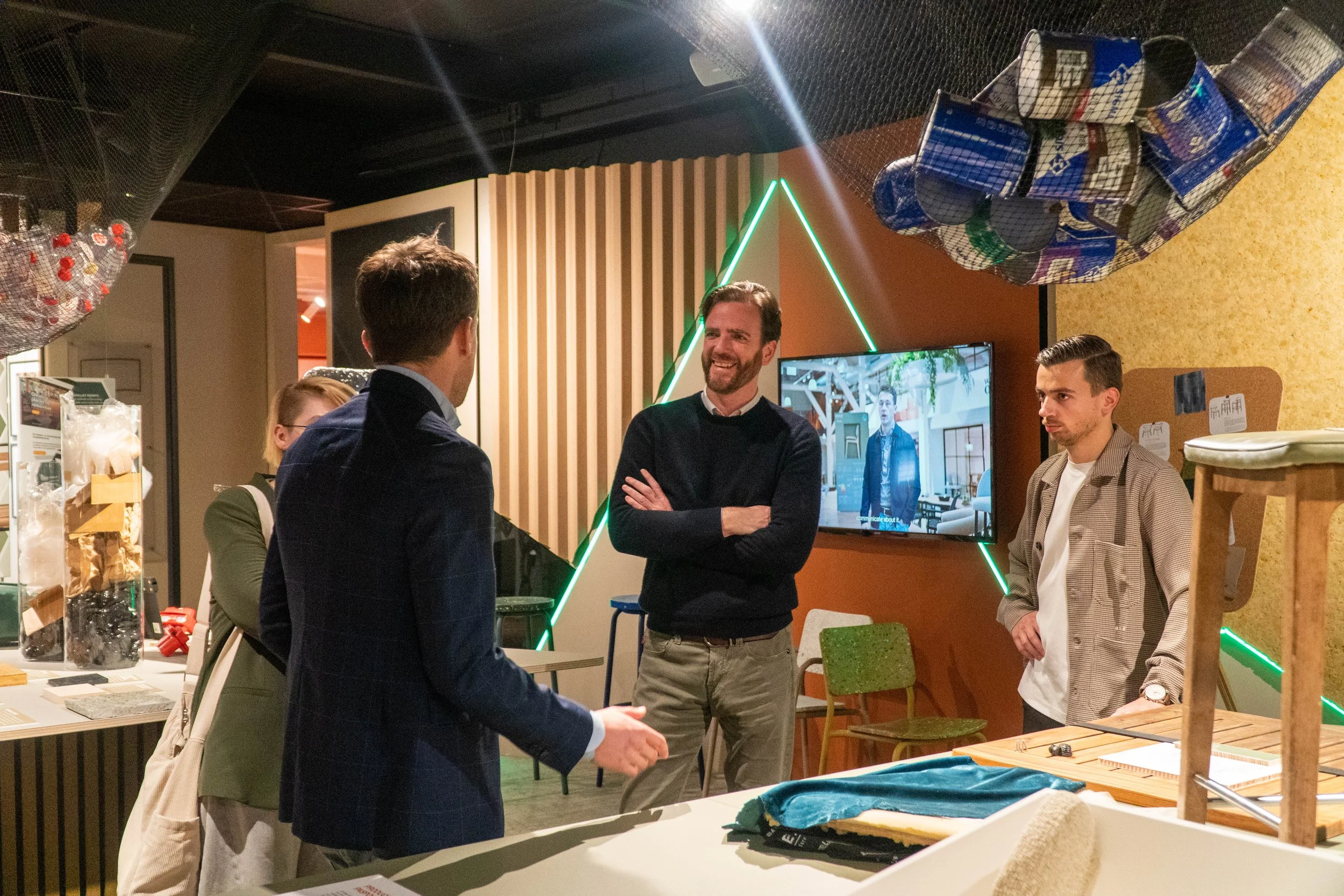
Beth, Floris, Adam and Gijs
Meeting the people who make circular design human
This mindset was embodied by Floris Bosmans, Satelliet’s sustainability lead. His story stuck with me. He didn’t arrive at sustainability through a corporate strategy, but through personal motivation. He began his career in management and facilities, but through personal experience and seeing the issues caused by climate change globally, he decided to shift to focus on where he could make small changes within Satelliet.
He talks about circularity with a clear purpose: to create furniture that lasts longer, can be repaired, and makes smarter use of materials. You can feel that the company’s culture reflects his values, and not the other way around.
Seeing someone drive sustainability as a personal mission and not just a job title was reassuring. It reminded me that real change comes from people, not policy statements.
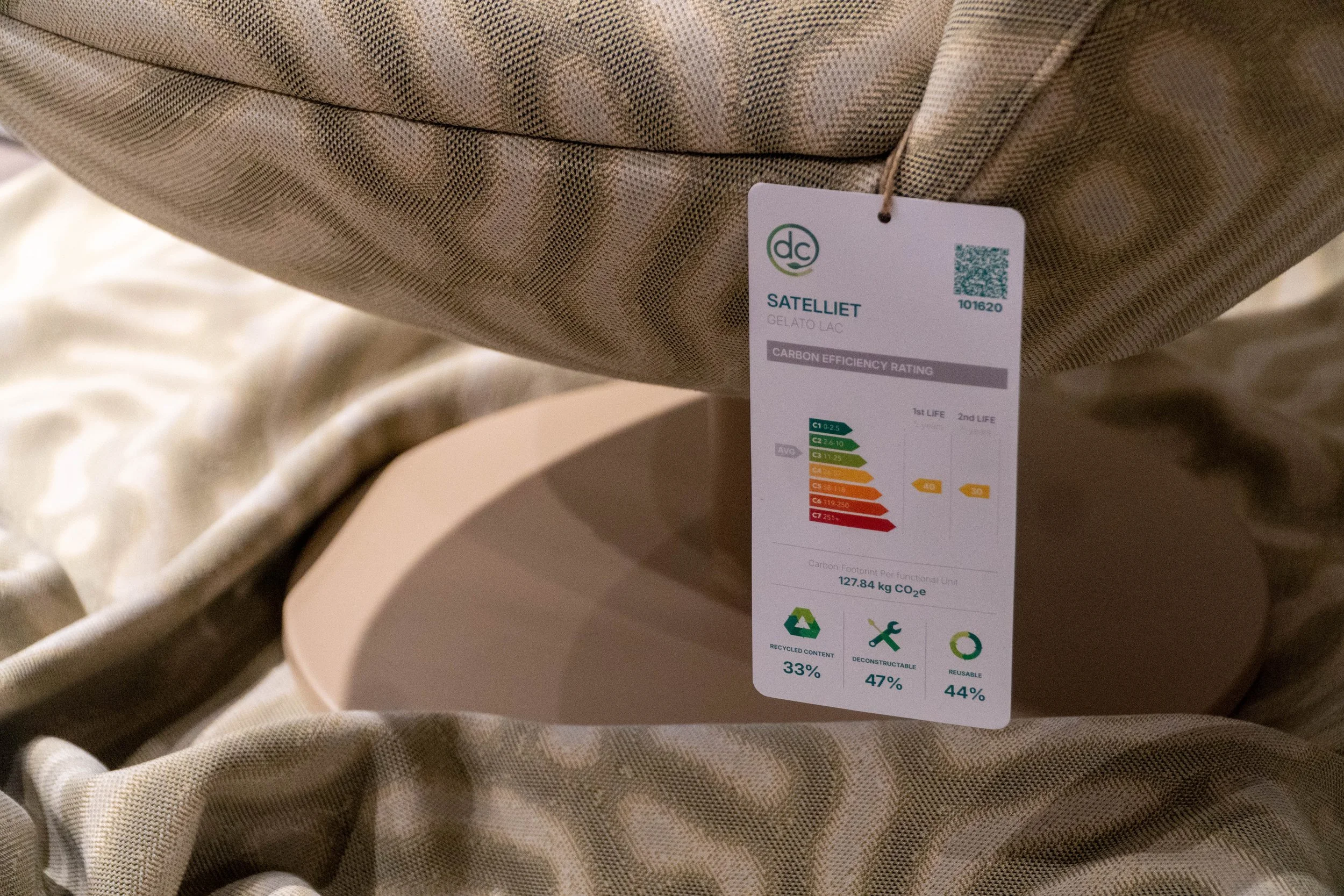
DC Certification for Satelliet
The beauty of the invisible
One of the most fascinating elements of sustainable furniture design is that you’re rarely supposed to notice it. If a product is comfortable, durable, and intuitive to use, you don’t stand in a café or hotel lobby thinking about its disassembly strategy or its fixing systems. You just sit down. You enjoy the space. You get on with your day.
Most of the sustainable effort is hidden. It’s in the metal thickness that adds strength without excess material. It’s in the single bolt that can be removed to separate parts at end-of-life.
These tiny, almost invisible decisions are what make a product last twice as long, be repaired instead of replaced, or disassembled instead of scrapped.
The less the customer has to think about it, the more successful it is.
5 takeaways from my time at Satelliet
1. Design for repair and longevity is essential
A favourite example was a banquette bench system using simple French cleat fixings. If one section gets damaged, that single part can be swapped without replacing the whole seat. Or the section can easily be reupholstered if needed. Such a small decision, but it drastically extends product life.
2. Heat the person, not the planet, for efficient heating systems.
Battery-heated seating is replacing patio heaters. With gas patio heaters being phased out due to energy and safety regulations, Satelliet has developed heated outdoor seating powered by discreet batteries. It keeps customers warm, increases outdoor dwell time, and avoids the energy waste of traditional heaters. Sustainable and commercially smart by heating the person and not the air around them.
3. Biophilic design goes beyond planting.
One of the most unexpected discoveries in the showroom was a chair that used a subtle rocking mechanism, not a classic rocking chair, but something far more intentional. Its movement wasn’t rhythmic or predictable. It offered a gentle, slightly resistant sway, creating a satisfying tension you instinctively pushed against. This is a core principle of biophilic design called Non-Rhythmic Sensory Stimuli: subtle, natural, unpredictable movement that mirrors how grasses sway in the wind or leaves flutter on a branch. In nature, these micro-movements calm us without demanding attention. The same effect is built into this chair.
It’s a reminder that longevity in furniture isn’t driven by durability alone. It’s driven by emotional attachment. If a piece naturally reduces stress, feels human to interact with, and creates a small moment of positive distraction, we choose to sit in it longer and keep it for more years.
4. Material strategy that balances aesthetics, durability, and client expectations.
One conversation amongst many that stood out was how often clients request timber for outdoor furniture because of its warmth, familiarity, and premium feel. But in the Dutch climate, real timber simply doesn’t stand the test of time; it weathers quickly, requires ongoing maintenance, and ultimately needs replacing far sooner than most commercial settings would like.
Rather than pushing back against what clients want, Satelliet approached the problem from a different angle: they designed an outdoor furniture range using steel engineered to look like timber. It meets the aesthetic brief clients consistently ask for, while offering far better durability, weather resistance and long-term performance. It’s a perfect example of how the team responds to customer expectations with creativity. Delivering the visual qualities people love, but with a material strategy that supports longevity and circularity.
This balance between client desire and responsible material choice shows how sustainability can be seamlessly integrated into the design process, rather than positioned as a restriction.
5. Certification can be a driver for transparency and continual improvement.
My time with Satelliet also reinforced the value of the Design Conformity labelling and accreditation system. In a market where customers often only interact with the finished product, the label becomes a clear marker of the unseen thinking; the engineering logic, material strategy and circular principles embedded within each piece. For Satelliet, this isn’t just a badge to display; it’s an internal benchmark that guides year-on-year progress. They use certification proactively, not reactively, and that mindset is exactly what positions them as leaders in the hospitality and contract furniture industry. Their commitment shows how transparency can empower both clients and designers to make better, more sustainable choices.