
The Problem with Polyurethane Foam: Is There a Better Alternative?
Ecolattice an alternative to problematic polyurethane foam
Polyurethane foam is everywhere, from mattresses and sofas to packaging and car interiors. It’s lightweight, versatile, and inexpensive, which has made it one of the most widely used materials in modern manufacturing.
But as sustainability and circularity become a priority across industries, customers and consumers are starting to question this material.
Is polyurethane foam recyclable?
What is it actually made from?
And importantly, are there better alternatives?
While PU foam has long been the default choice for comfort and cushioning, its environmental limitations are becoming increasingly difficult to ignore.
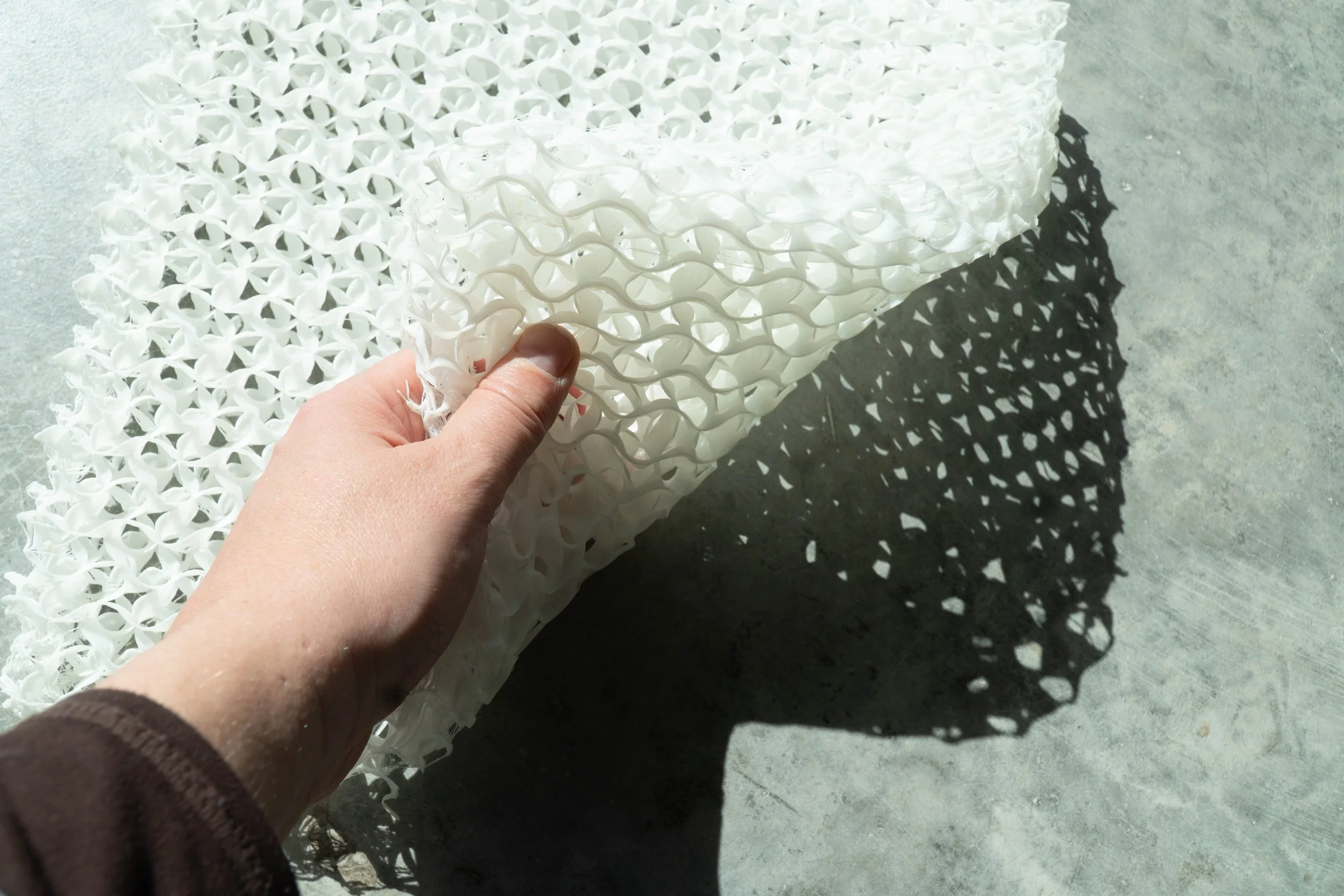
As a result, new approaches are beginning to emerge. Fom incremental improvements like bio-based foams to entirely different ways of designing materials. Companies such as EcoLattice are exploring alternatives that move beyond traditional foam altogether, using recyclable materials and engineered structures to rethink how comfort and cushioning can be produced.
Ecolattice an alternative to problematic polyurethane foam
The Problem with Polyurethane Foam
Polyurethane foam is a petrochemical-based material, derived from fossil fuels such as crude oil and natural gas. Its production relies on chemical reactions between polyols and diisocyanates, creating a lightweight, flexible structure.
This structure is what makes PU foam useful, but it’s also what makes it problematic.
Polyurethane foam is typically a thermoset material, meaning it cannot be melted down and reshaped once it has been formed. This severely limits its recyclability and contributes to a largely linear lifecycle: produce, use, dispose.
In practice, most PU foam products, especially mattresses and upholstered furniture, end up in landfill, are incinerated at the end of their life or are downcycled into products such as underlay.
Why Recycling PU Foam Isn’t Working
Although polyurethane foam can technically be recycled, the reality is far more complex.
Its thermoset nature means it cannot be easily reprocessed, and it is often bonded with other materials such as fabrics, adhesives, and coatings. This makes separation difficult and costly.
Even when recycling does occur, it is often limited to downcycling, where the material is converted into lower-value products rather than being reused in the same form.
The scale of the issue is significant. According to a European Commission report, around 675,000 tonnes of polyurethane foam waste are generated in Europe each year, much of which is still landfilled or incinerated rather than effectively recycled.
As a result, recycling rates remain low, and large volumes of foam waste continue to accumulate globally.
Is PU Foam Bad for Your Health?
Questions are increasingly being raised about the chemicals associated with PU foam, particularly in upholstered furniture. The UK has stricter flammability regulations than many regions, which has historically driven the widespread use of chemical flame retardants in sofas. In some cases, these additives can make up a significant proportion of the foam, with estimates suggesting 15% or more of a typical UK sofa consists of flame-retardant chemicals.
Some of these substances have been linked in long-term studies to potential health risks, including hormone disruption and cancer. Over time, these chemicals can migrate out of furniture and accumulate in household dust, where they may be inhaled, ingested, or absorbed through the skin.
There is a big push currently from within the industry to maintain a high level of fire safety while meaningfully reducing chemical flame-retardant use.
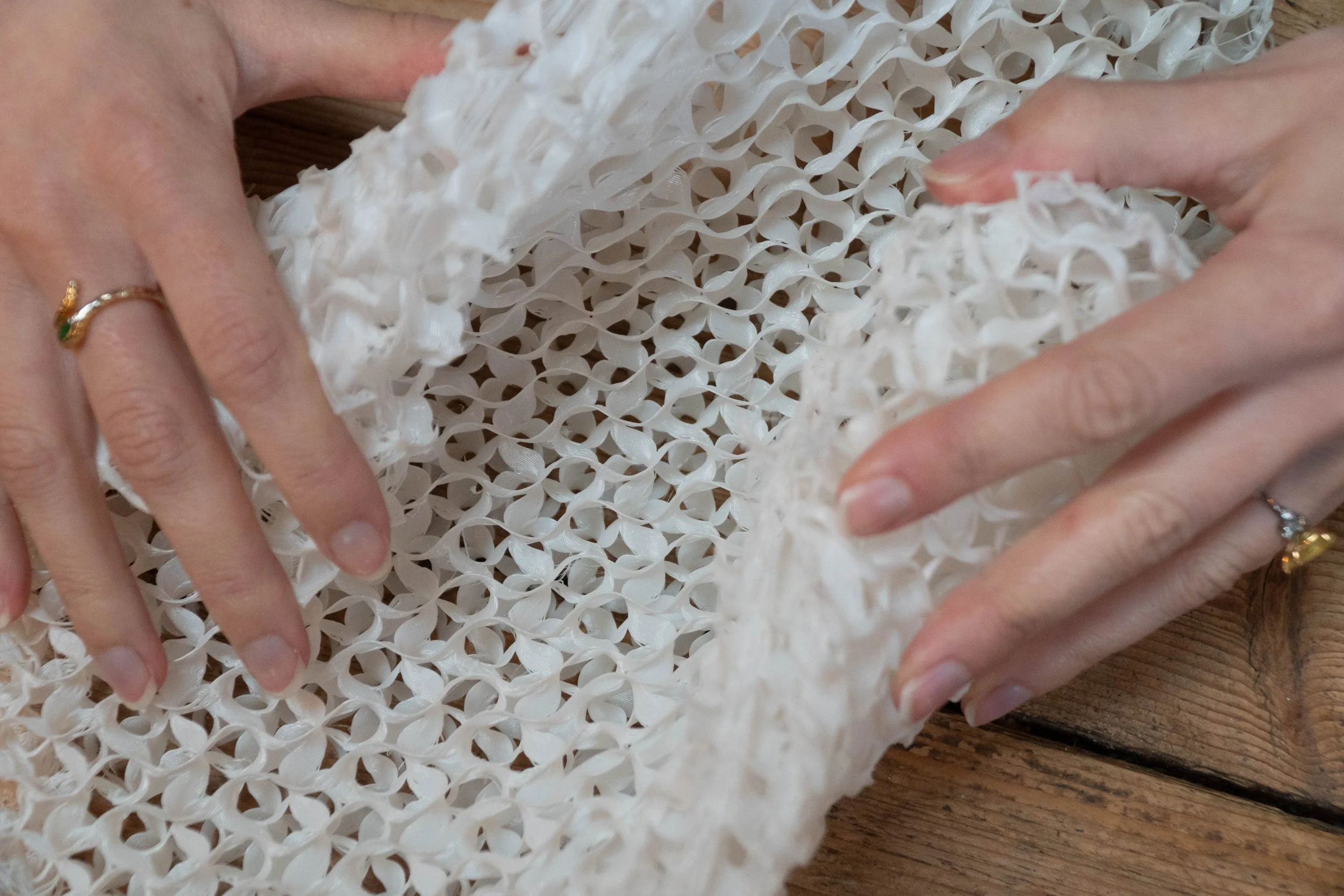
As a comparison, EcoLattice’s EcoTPU™ material achieves strong fire performance without relying heavily on added flame-retardant chemicals. Its lightweight structure contains less combustible material than traditional PU foam, while the open lattice design helps reduce the spread of heat and flames. Unlike conventional closed-cell foam, which can trap combustible gases, EcoLattice’s engineered structure is designed to improve fire performance through geometry rather than chemical additives.
Ecolattice an alternative to problematic polyurethane foam
Rethinking Foam: A New Approach from EcoLattice
In recent years, new material innovations have begun to challenge the traditional concept of foam altogether.
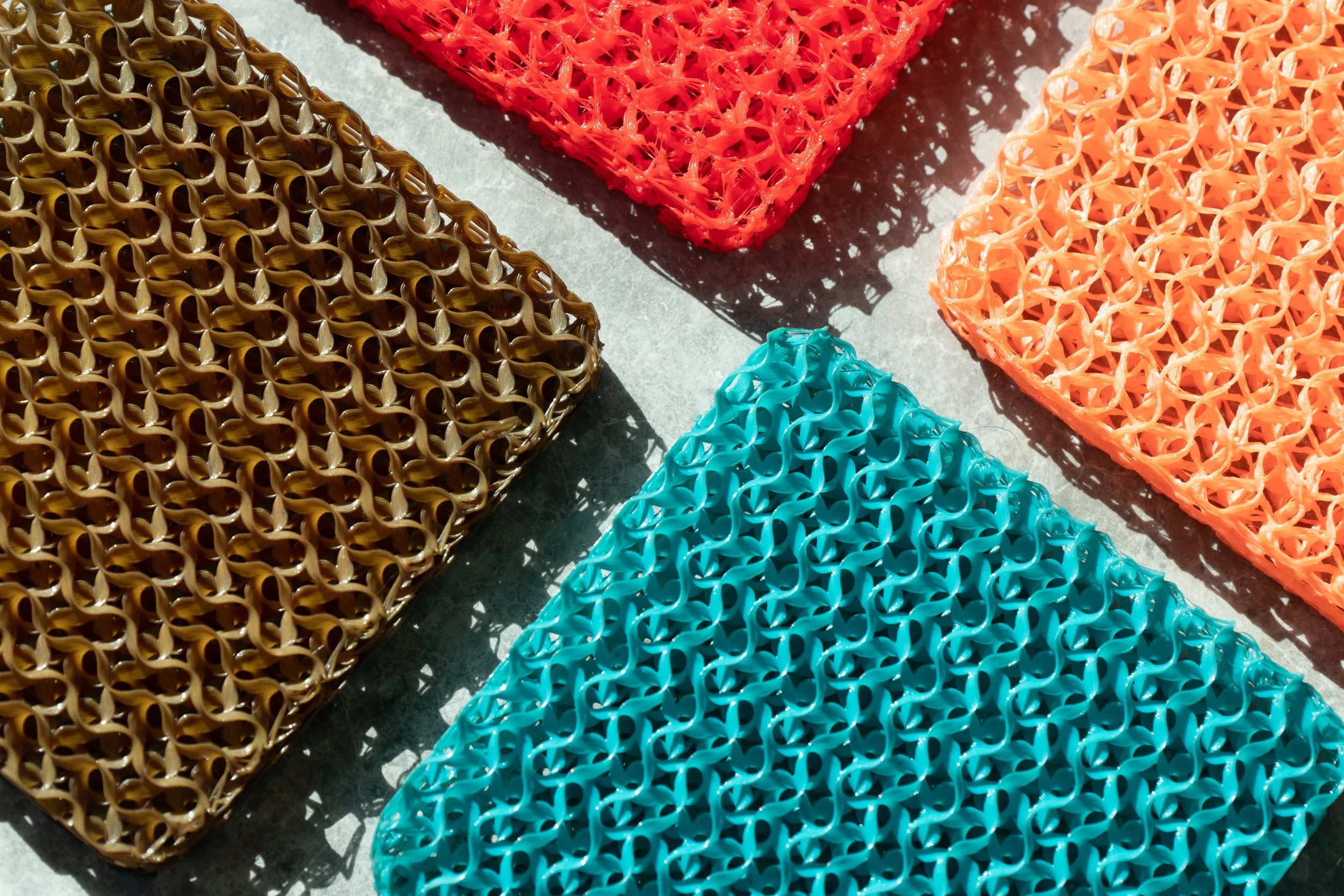
Rather than relying on chemical expansion to create a soft, cellular structure, EcoLattice use engineered geometries to achieve similar or even improved performance.
EcoLattice uses a digital manufacturing process that transforms waste materials into engineered structures. At its core, the system begins with recycled thermoplastic elastomers (TPEs) sourced from post-consumer and industrial waste streams. These materials are processed into pellets, refined into filaments, and then used as the input for 3D printing.
The material is built into lattice geometries, precisely designed structures that replicate and often outperform the cushioning behaviour of traditional foam. The lattices are digitally controlled, allowing for consistency, repeatability, and design flexibility.
Because the material is thermoplastic, it can be remelted and reprocessed, enabling a more circular lifecycle. At the same time, the additive manufacturing process produces near-zero material waste, avoiding the trimming and offcuts associated with traditional foam production.
EcoLattice also introduces a level of customisation that is not possible with conventional foam. By capturing pressure data and using parametric design tools, lattice structures can be tuned to create varying density zones tailored to individual users or applications.
EcoLattice allows for:
Reduced material waste through precise production
Customisable performance, with different densities and support zones
Improved recyclability, as thermoplastic materials can be remelted and reused
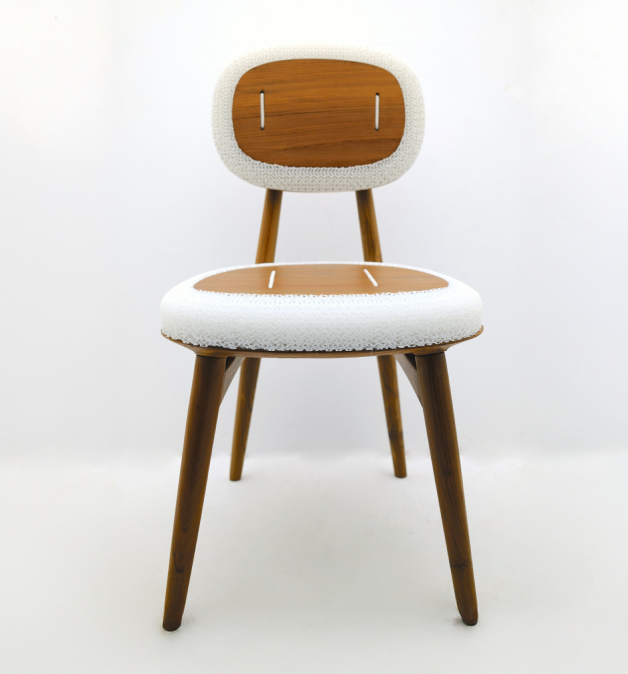
Ecolattice in collaboration with designer Ariana Kilachand
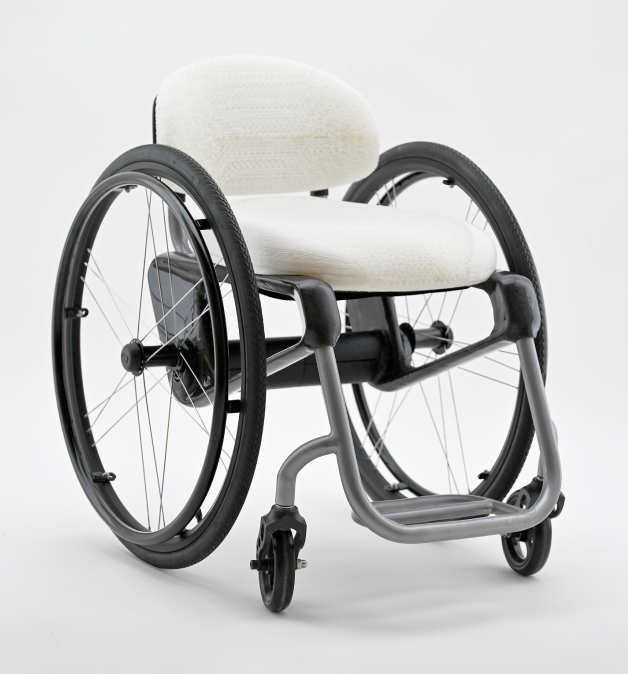
Ecolattice wheelchair cushion
-
Technically yes, however in reality this is not really the case.
Both mattresses and upholstered furniture join municipal waste or “bulky” waste streams in Europe.
It is difficult to obtain reliable public statistics on how bulky waste streams are treated. Research by the European Bedding Industry Association in 2020, however showed that 49% of mattresses are landfilled in the European Union today, 33% are sent to energy plants and 17% are recycled.
While little data is available for furniture, the European Commission estimates that less than 10% of furniture is recycled across the EU.
-
Flexible polyurethane foam is a polymeric material which is produced by combining two main substances: polyols and diisocyanates. Polyols and diisocyanates, are predominantly derived from crude oil and natural gas. Polyols are made from propylene oxide or ethylene oxide, while diisocyanates (TDI/MDI) are produced from aniline, formaldehyde, and phosgene.
Because of this composition, most PU foam is fossil fuel-based, which contributes to its environmental footprint and makes it difficult to integrate into circular material systems.
-
The key difference between thermoset and thermoplastic polymers lies in how they respond to heat, which directly affects their recyclability.
Thermoplastics can be melted, reshaped, and reused multiple times without significantly altering their chemical structure. This makes them well-suited to recycling and circular manufacturing systems.
Thermosets, on the other hand, undergo a chemical curing process that creates a rigid, cross-linked structure. Once set, they cannot be remelted or reshaped. Instead, they tend to degrade or burn when exposed to high temperatures.
Polyurethane foam is typically a thermoset material, which is why it is so difficult to recycle in practice. This fundamental limitation is one of the main reasons alternative materials and manufacturing approaches are being explored.
-
Polyurethane foam is difficult to recycle primarily because it is a thermoset material, meaning it cannot be melted down and reprocessed like many other plastics. Once cured, its chemical structure is permanently set, which prevents it from being reshaped or remoulded.
In addition to this, PU foam is often used in complex products such as mattresses and upholstered furniture, where it is bonded with fabrics, adhesives, and other materials. This makes separation both technically challenging and costly.
While some recycling methods exist, such as mechanical grinding or chemical processes, they are limited in scale and often result in downcycled materials rather than true material recovery. As a result, most polyurethane foam still ends up in landfill or is incinerated.
-
There are a growing number of alternatives to polyurethane foam, but their sustainability varies significantly.
Some options include bio-based foams, which partially replace fossil fuel inputs with renewable sources, and recycled foam blends, which incorporate existing waste materials. While these approaches can reduce environmental impact, they often retain the same structural limitations as traditional PU foam, particularly when it comes to recyclability.
More recently, alternative approaches have emerged that rethink how cushioning materials are made altogether. For example, lattice-based structures like Eco Lattice produced from recyclable thermoplastics offer a different pathway, one that can enable both performance and circularity. These systems move away from chemical foaming processes and instead use engineered geometries to deliver comfort and support.
-
Flame retardant (FR) chemicals are substances added to materials to slow down or prevent the spread of fire. In upholstered furniture, they are commonly used in polyurethane foam to help products meet fire safety regulations, particularly in regions like the UK where standards are more stringent.
However, concerns have been raised about certain types of flame retardants, which have been linked in studies to potential health risks including hormone disruption and cancer. Because these chemicals are often added rather than chemically bound to the material, they can migrate out of products over time and accumulate in household dust, leading to ongoing low-level exposure in indoor environments.